Our top picks at a glance
If you just want the short answer: these are the kits we'd hand a first-timer in 2026. All four are complete kits (pre-printed cover, pre-cut yarn sorted by colour, wooden tool and instructions in the box), designed in Australia by After Thoughts, with free AU shipping over $80. All are


Want to compare cushion kits in more detail? See our full latch hook cushion kits guide. Thinking bigger? Read latch hook rug kits: read this before you buy first.
What to look for in a latch hook kit
The latch hook kit market in Australia is patchy. Some kits are genuinely excellent: well-designed patterns, good yarn quality, properly prepared canvas. Others cut corners in ways that make the crafting experience noticeably worse, particularly for beginners who don't yet know what to expect.
This guide covers the key variables so you know what you're buying, whether you're picking up a kit from a local craft store or ordering online.
The best beginner kits include a canvas with the pattern printed or coloured directly onto the grid. This removes the need to constantly reference a separate chart. If the canvas is plain, you'll need to count your way across a separate pattern sheet, fine once you're experienced, but unnecessarily difficult at the start.
Good kits come with yarn pre-cut to the correct length (typically 7–8cm) and sorted by colour in separate bags or compartments. Kits that dump all the yarn together unsorted are fine if you're patient, but sorting by colour before you start is one of the first things experienced makers recommend.
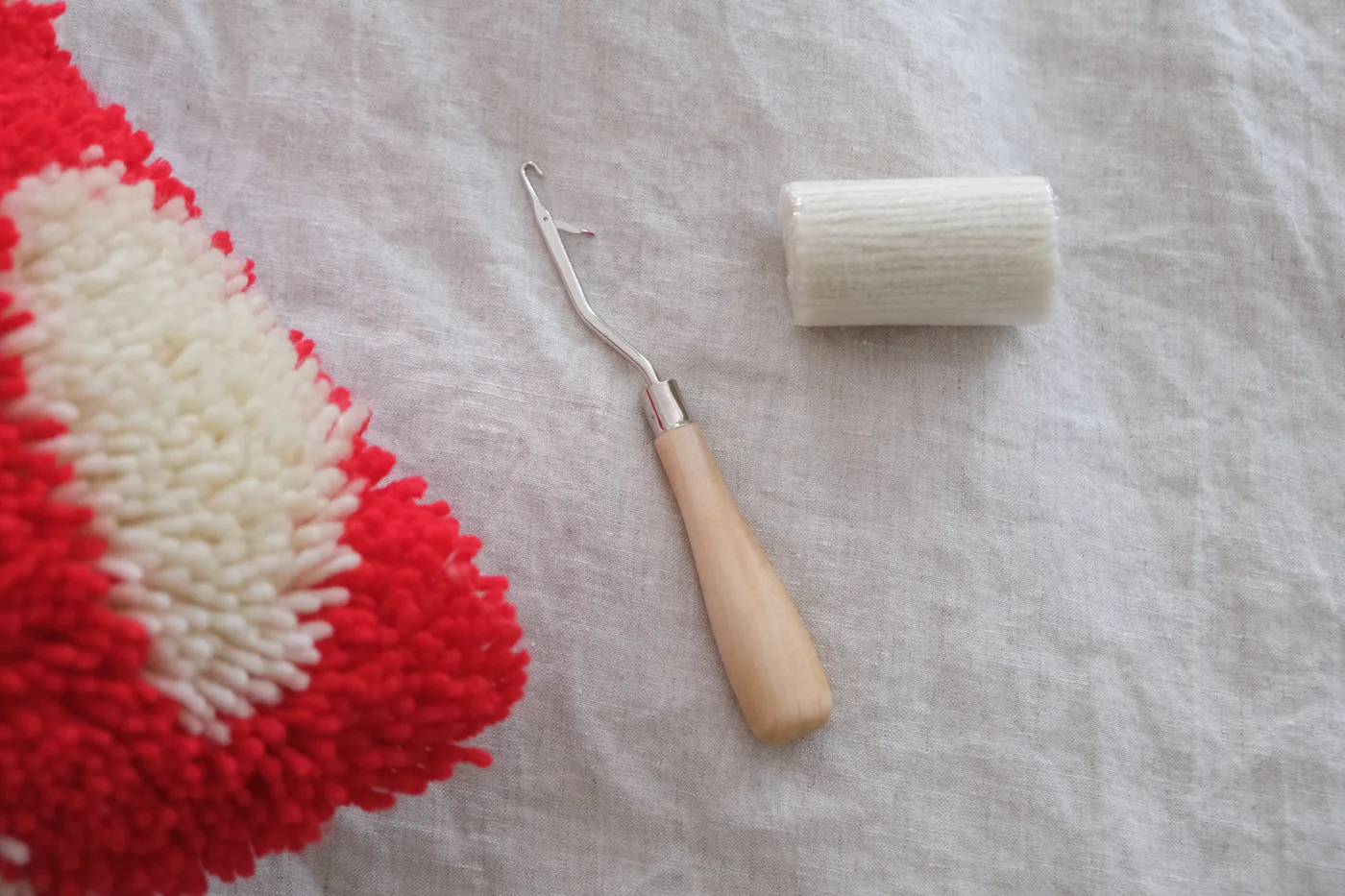
Any complete beginner kit should include the latch hook tool. If it's sold separately, it's not a complete kit, and the tool sold separately is often a worse version than what would come in a well-put-together kit anyway.
For absolute beginners, instructions matter. Ideally step-by-step with diagrams showing the hook motion. Some kits include a QR code or URL to a video walkthrough, that's even better.
Canvas quality: the most underrated factor
The canvas is the single biggest quality differentiator between kits. Canvas quality determines how the finished piece looks and how pleasant it is to work with.
What to look for in a canvas:
Even, consistent hole spacing. A good canvas has uniform hole spacing across the entire grid. Inconsistent spacing makes it harder to work in rows and can cause the finished piece to look uneven.
Firm, stable backing. The canvas should be stiff enough to hold its shape while you work. Canvas that's too flimsy will curl and shift, making each knot harder to place accurately.
Clean edges. A well-prepared canvas has finished edges that won't fray as you work. Unfinished edges are a common corner-cut in cheaper kits and can mean the canvas unravels as you handle it.
If you're making a cushion cover, the cushion insert is almost always sold separately. Good kits are upfront about this: be cautious of any kit that implies you'll have a complete, usable cushion at the end without mentioning the insert separately. After Thoughts sells cushion inserts separately so you can grab both at once.
Yarn: what actually matters
Pre-cut yarn in latch hook kits is typically acrylic or a wool-acrylic blend. For most purposes, the fibre content matters less than the cut length and colour consistency.
Cut length
Standard cut length for most canvas gauges is around 7–8cm. Too short and the pile won't be dense enough. Too long and the ends will be floppy and the piece won't hold its shape. A well-calibrated kit gets this right, if the cut length looks noticeably different from the canvas hole gauge, that's a warning sign.
Colour consistency
In a good kit, every piece of yarn in the same colour is the same dye lot. Colour inconsistency (slightly different shades within what's supposed to be one colour) shows up clearly in the finished piece and is a sign of a poorly sourced kit.
Quantity
A complete kit should include enough yarn to fill every hole in the canvas with a small surplus. Running out of one colour before completing a section is a well-known frustration with budget kits, they cut the yarn allocation too close and you end up with gaps.
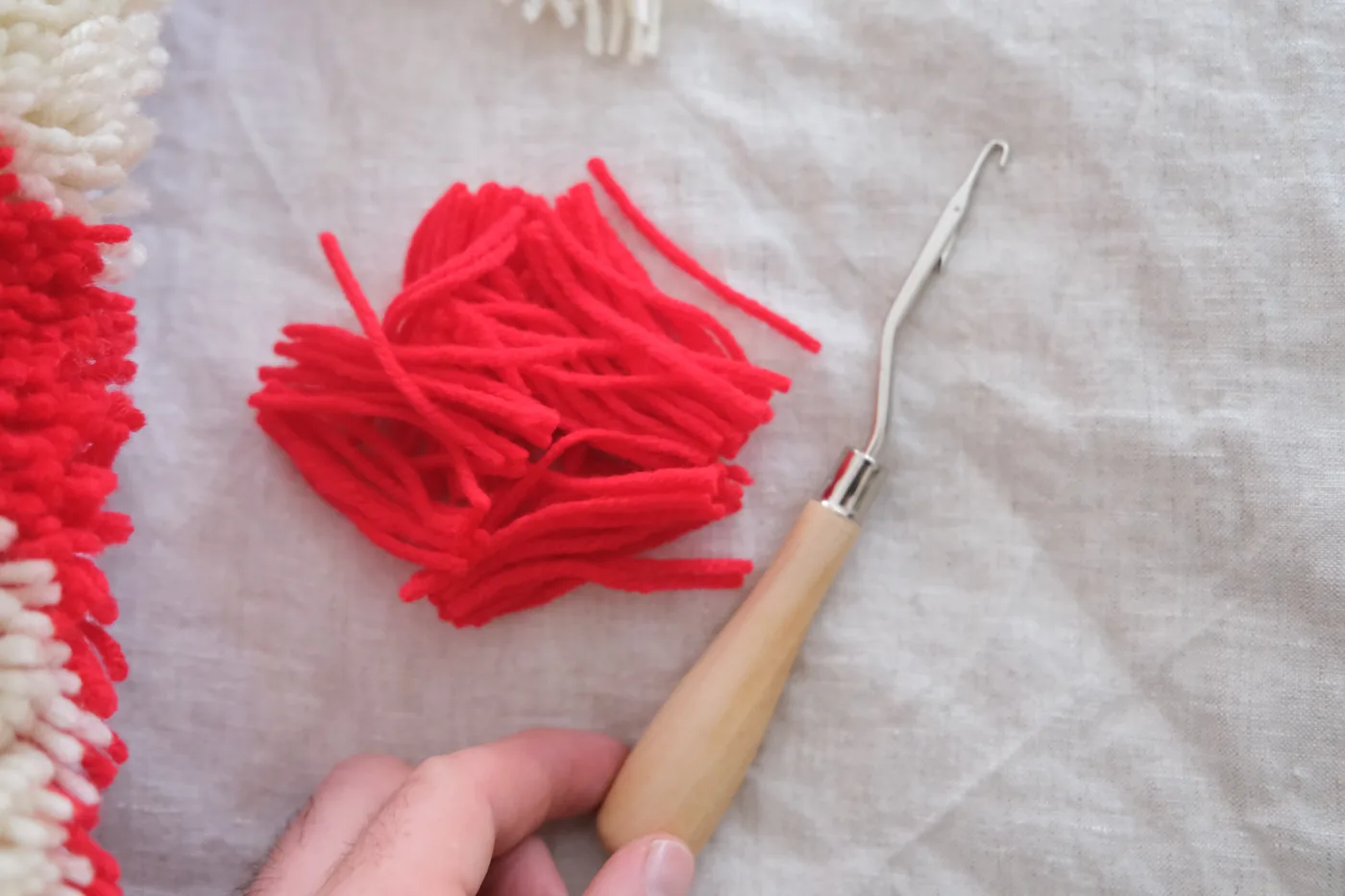
Good yarn should feel substantial in the hand and sit densely in the canvas when knotted.
Size guide: what to choose as a beginner
Latch hook kits come in a range of sizes. The right size depends on your patience level and how much you want to achieve in your first session.
Completable in a few hours. Good for learning the technique without a big commitment. Can become a small wall hanging or decorative piece.
The standard cushion cover size. Takes a weekend or a few evenings. The right level of challenge for most beginners, achievable but satisfying.
A multi-week project. Not recommended as a first kit, start with a cushion and come back to rug size once you're comfortable with the process.
What a complete kit should include
A properly put together beginner kit includes everything you need to complete the project, nothing left to buy separately except the cushion insert (if making a cushion cover). Specifically:
A pre-printed canvas with the pattern marked directly on the grid. Pre-cut yarn in all required colours, sorted separately, with enough to complete the design plus a small buffer. The latch hook tool. Instructions covering the technique and finishing. If it's a cushion kit, a backing fabric or cover to complete the cushion (with clear communication that the insert is sold separately).
Red flags to watch for
Yarn sold loose and unsorted. Fine if you're experienced, but a sign the kit hasn't been designed with beginners in mind.
No pattern marked on the canvas. Means you'll spend time counting from a separate chart instead of just looking at the canvas while you work.
Tool not included. It's not a complete kit if you still need to buy the core tool.
Suspiciously cheap kits. The yarn quantity and quality required to properly fill a canvas at the right pile density has a floor cost. Kits priced significantly below that floor are either under-supplying yarn or using poor-quality materials.
Where to buy latch hook kits in Australia (and near you)
If you're searching for latch hook kits near you, here's the honest picture. Big chain craft stores like Spotlight and Lincraft do stock latch hook, but the range is limited and mostly aimed at kids: small cartoon designs, plastic tools, unsorted yarn. Independent craft stores rarely carry latch hook at all, since it's a niche within a niche.
That means most quality latch hook kits in Australia are sold online. Buying online from After Thoughts is still easy on the wallet: we ship Australia-wide, with free shipping on orders over $80, and a kit ordered tonight typically costs less than a lower-quality kit plus petrol to the nearest Spotlight.
One more advantage of ordering online: you can see the actual finished piece photographed in a real home before you commit, rather than judging a kit by the front of a box.
Latch hook kits for adults
A lot of people remember latch hook from childhood and assume kits are still cartoon characters on small canvases. The craft has moved on. Modern kits are designed for adults: contemporary patterns, cushion-scale projects, and a finished piece you'd genuinely style a room with.
If you're buying for yourself or as a gift for an adult, the checklist in this guide still applies, but design matters more than anything: you're going to spend 8 to 10 hours with the pattern and years with the finished cushion. We've written a full guide to latch hook kits for adults, including what separates an adult kit from a kids' one.